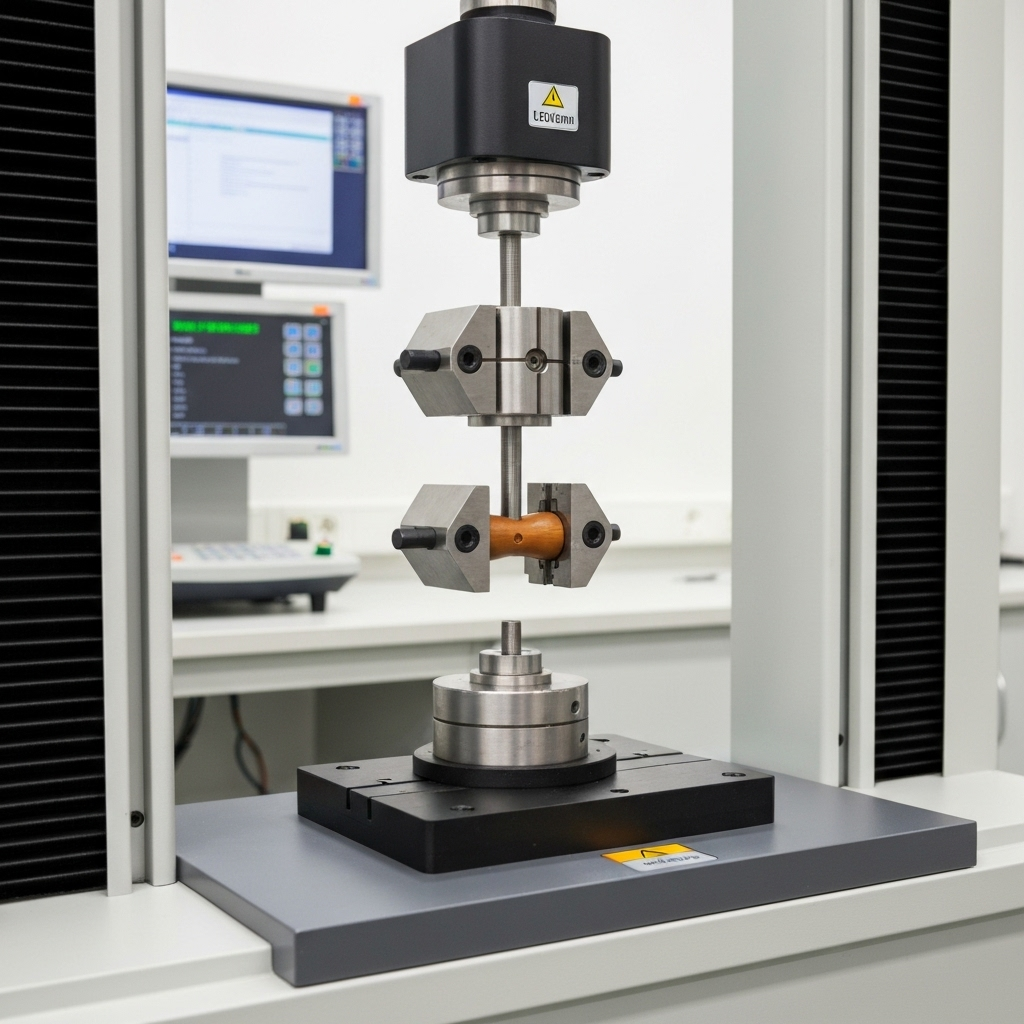
Plastics Overview
Comprehensive guide to plastic materials, their properties, applications, and manufacturing considerations for optimal product development.
Types of Plastics
Understanding the fundamental categories of plastic materials and their unique characteristics for different manufacturing applications.
Thermoplastics
Recyclable & Reprocessable
Materials that soften when heated and harden when cooled, allowing for multiple processing cycles and recycling. Ideal for injection molding and extrusion processes.
Common Types:
ABS
Tough, impact-resistant
Polypropylene
Chemical resistant
Polyethylene
Flexible, durable
Nylon
High strength
Thermosets
Permanent Cross-Linking
Materials that undergo irreversible chemical changes when heated, creating permanent cross-links. Excellent for high-temperature and structural applications.
Common Types:
Epoxy
Strong adhesion
Phenolic
Heat resistant
Polyurethane
Flexible, tough
Silicone
Temperature stable
Key Properties
Understanding critical material properties is essential for selecting the right plastic for your application requirements.
Mechanical
- • Tensile Strength
- • Impact Resistance
- • Flexural Modulus
- • Fatigue Resistance
- • Hardness
Thermal
- • Glass Transition Temp
- • Melting Point
- • Thermal Expansion
- • Heat Deflection
- • Thermal Conductivity
Chemical
- • Chemical Resistance
- • UV Stability
- • Oxidation Resistance
- • Solvent Compatibility
- • pH Tolerance
Electrical
- • Dielectric Strength
- • Volume Resistivity
- • Dielectric Constant
- • Arc Resistance
- • Dissipation Factor
Common Plastic Materials
Detailed overview of the most frequently used plastic materials in manufacturing, their properties, and typical applications.
ABS (Acrylonitrile Butadiene Styrene)
Tough, impact-resistant thermoplastic with excellent dimensional stability and surface finish. Widely used in automotive, electronics, and consumer products.
Properties
- • Tensile: 40-50 MPa
- • Impact: 10-25 kJ/m²
- • HDT: 85-105°C
- • Density: 1.05 g/cm³
Applications
- • Automotive parts
- • Electronic housings
- • Toys & appliances
- • Pipe fittings

PP (Polypropylene)
Versatile thermoplastic with excellent chemical resistance, low density, and good fatigue resistance. Ideal for packaging, automotive, and medical applications.
Properties
- • Tensile: 30-40 MPa
- • Impact: 2-5 kJ/m²
- • HDT: 100-140°C
- • Density: 0.90 g/cm³
Applications
- • Food packaging
- • Medical devices
- • Automotive interiors
- • Textiles & fibers
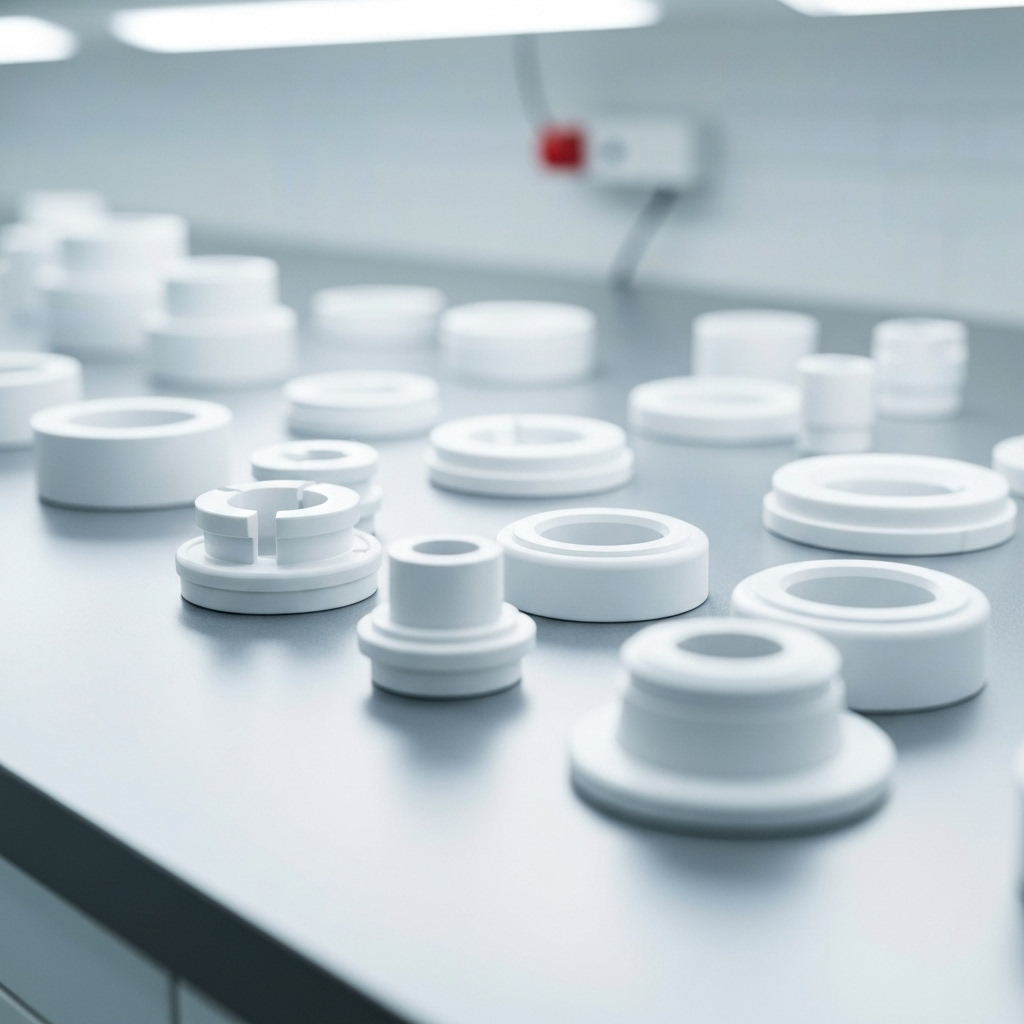
PA (Nylon/Polyamide)
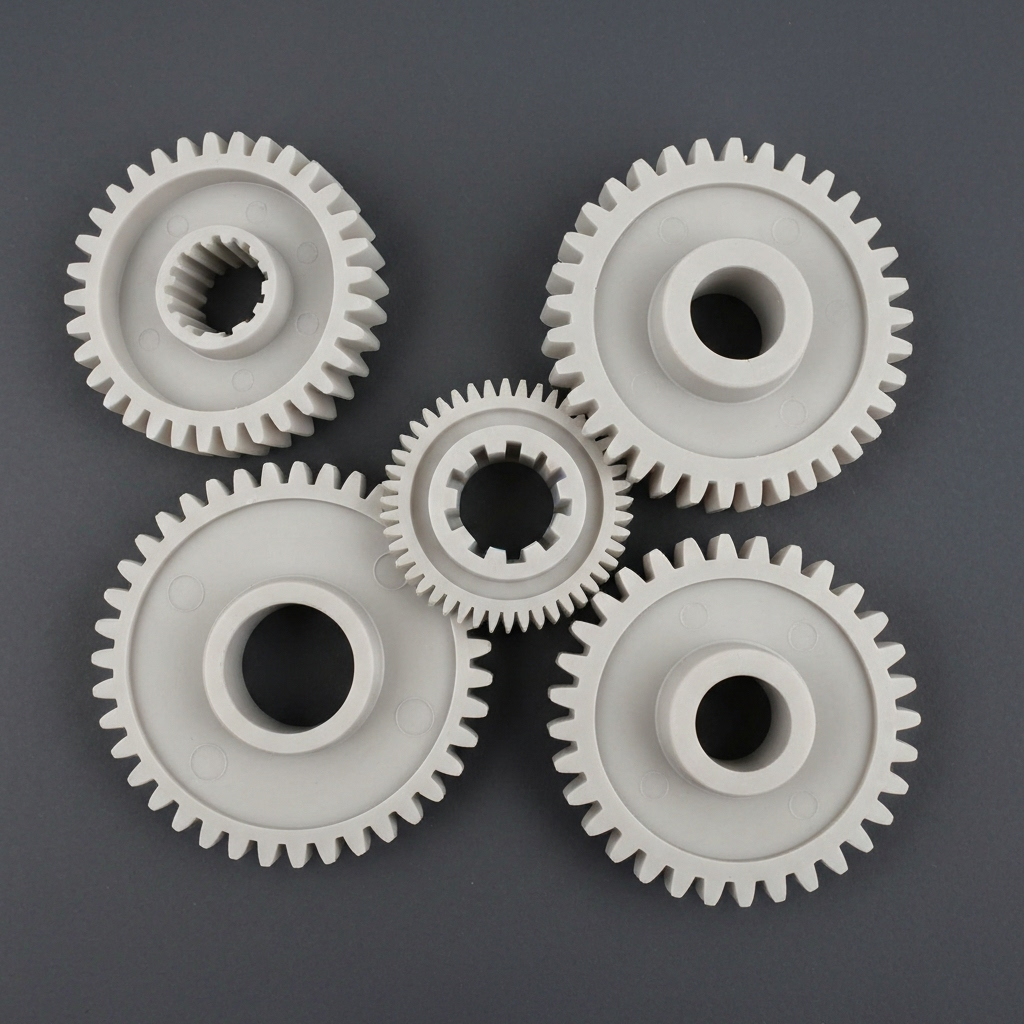
High-strength engineering thermoplastic with excellent wear resistance and mechanical properties. Perfect for gears, bearings, and structural components.
Properties
- • Tensile: 70-85 MPa
- • Impact: 5-10 kJ/m²
- • HDT: 180-220°C
- • Density: 1.14 g/cm³
Applications
- • Gears & bearings
- • Structural parts
- • Electrical connectors
- • Industrial fittings
PE (Polyethylene)
Most widely used plastic with excellent chemical resistance and flexibility. Available in various densities for different applications from films to structural components.
Properties
- • Tensile: 20-35 MPa
- • Impact: 5-50 kJ/m²
- • HDT: 40-80°C
- • Density: 0.91-0.97 g/cm³
Applications
- • Packaging films
- • Bottles & containers
- • Pipes & fittings
- • Toys & housewares

Material Selection Criteria
Key factors to consider when selecting the optimal plastic material for your specific application requirements.
Performance Requirements
- Mechanical strength needs
- Temperature resistance
- Chemical compatibility
- Electrical properties
- UV stability requirements
Processing Considerations
- Processing temperature
- Mold shrinkage rates
- Flow characteristics
- Cycle time optimization
- Surface finish quality
Environmental Impact
- Recyclability options
- Bio-based alternatives
- End-of-life disposal
- Carbon footprint
- Regulatory compliance
Additives & Modifiers
Enhance plastic properties through carefully selected additives and modifiers to meet specific performance requirements.
Reinforcements
- • Glass Fibers
- • Carbon Fibers
- • Mineral Fillers
- • Aramid Fibers
Stabilizers
- • UV Stabilizers
- • Heat Stabilizers
- • Antioxidants
- • Light Stabilizers
Processing Aids
- • Lubricants
- • Flow Enhancers
- • Mold Release
- • Nucleating Agents
Functional
- • Colorants
- • Flame Retardants
- • Antimicrobials
- • Conductive Fillers
Need Material Selection Guidance?
Our materials engineers can help you select the optimal plastic for your specific application requirements and manufacturing process.